Did Wall Street’s third-quarter Bitcoin ETF buying provide lasting support? The figures available when this was reported on November 19, 2026, do not establish that it did. The quarterly filings describe earlier positions; subsequent fund-flow data describe activity across the ETF market, not necessarily trades by the same institutions.
According to the article’s review of 13F filings, 10 large institutions increased their spot Bitcoin ETF holdings by the equivalent of 54,929 BTC in the third quarter, bringing their combined holdings to about 117,000 BTC. It reported a 92.8% increase for Wells Fargo, an increase of nearly 600% for Bank of America, and an addition of more than 7,000 BTC equivalent for Millennium Management.
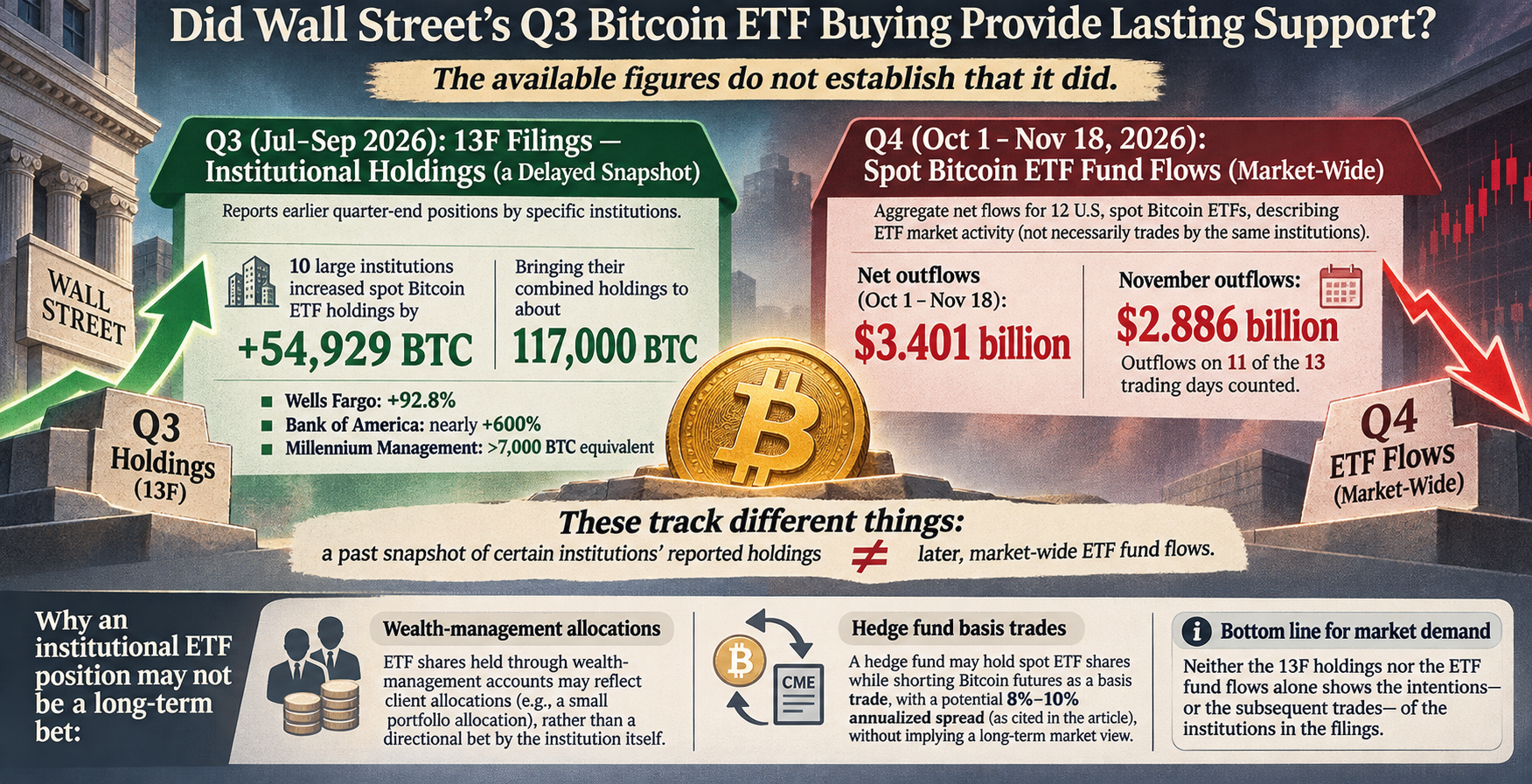
The more recent aggregate flows pointed in the opposite direction. Citing Farside data, the article reported $3.401 billion in net outflows from 12 U.S. spot Bitcoin ETFs between October 1 and November 18. It said November accounted for $2.886 billion in net outflows, with outflows on 11 of the 13 trading days counted. Those dollar flows cannot identify which third-quarter filers sold, or whether any of them sold at all.
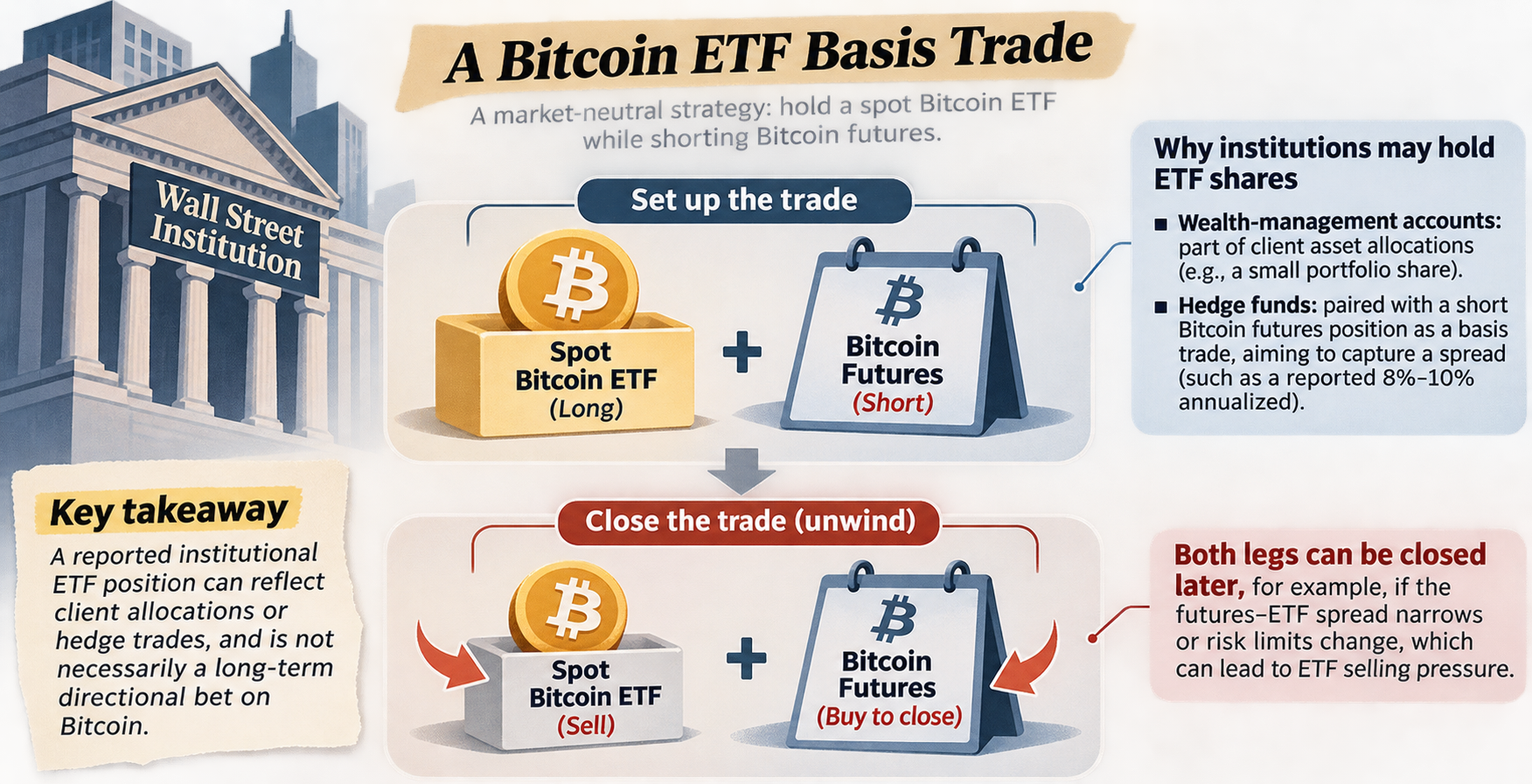
The article offered two possible explanations for why a reported institutional ETF position need not represent a long-term directional bet: ETF shares held through wealth-management accounts may reflect client allocations, while a hedge fund may hold spot ETF shares alongside a short Bitcoin futures position as a basis trade. It cited a potential 8%–10% annualized spread for the latter strategy, but supplied no trade-level evidence establishing that return for the named firms or showing that their positions were unwound.
For readers assessing Bitcoin market demand, the distinction is between a delayed snapshot of holdings and later, market-wide ETF flows. Neither measure alone shows the intentions—or the subsequent trades—of the institutions in the filings.