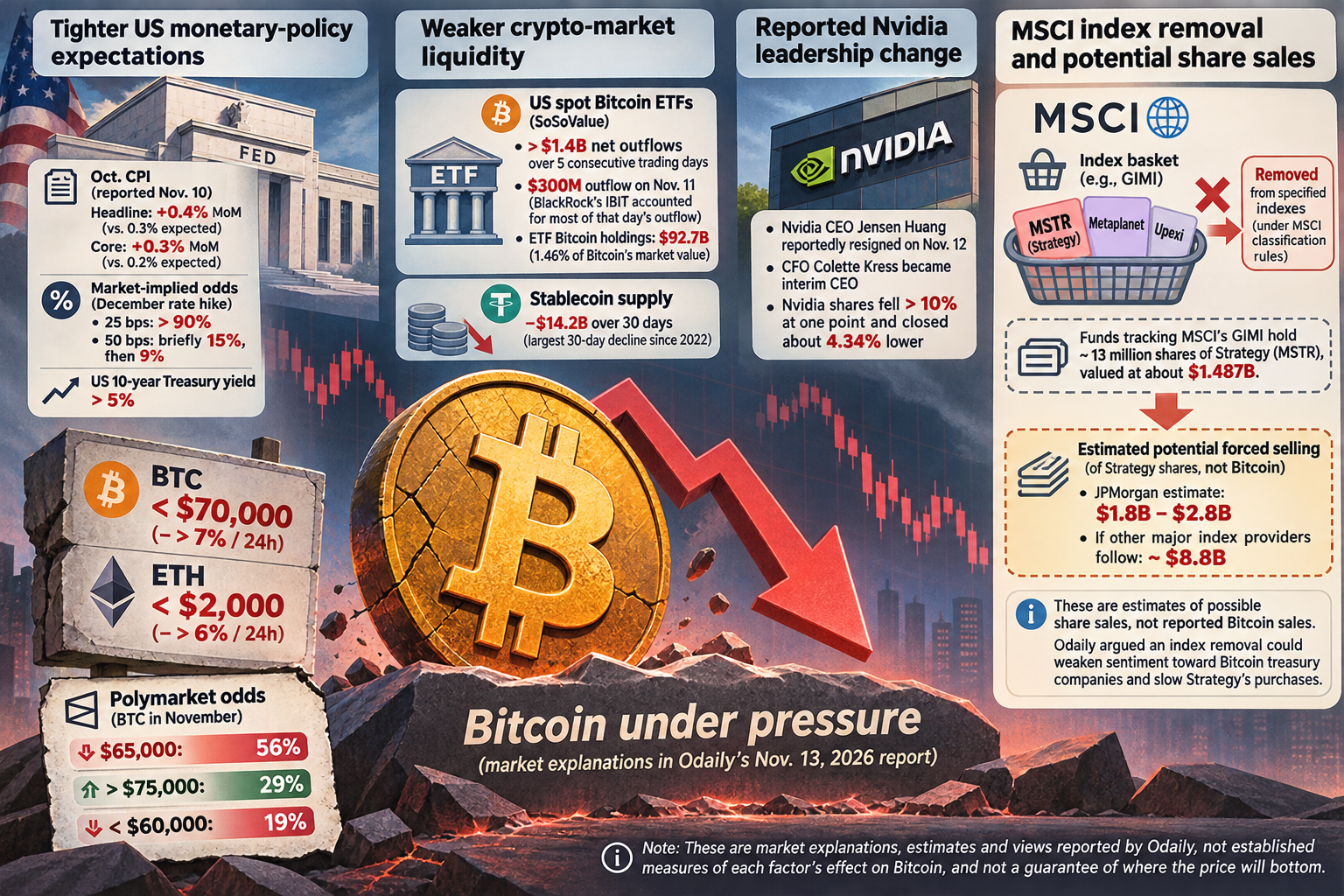
What was driving Bitcoin’s fall below $70,000? In its November 13, 2026 report, Odaily pointed to tighter US monetary-policy expectations and weakening crypto-market liquidity. It also linked the day’s sell-off to a reported leadership change at Nvidia. These are market explanations in the report, not established measures of each factor’s effect on Bitcoin.
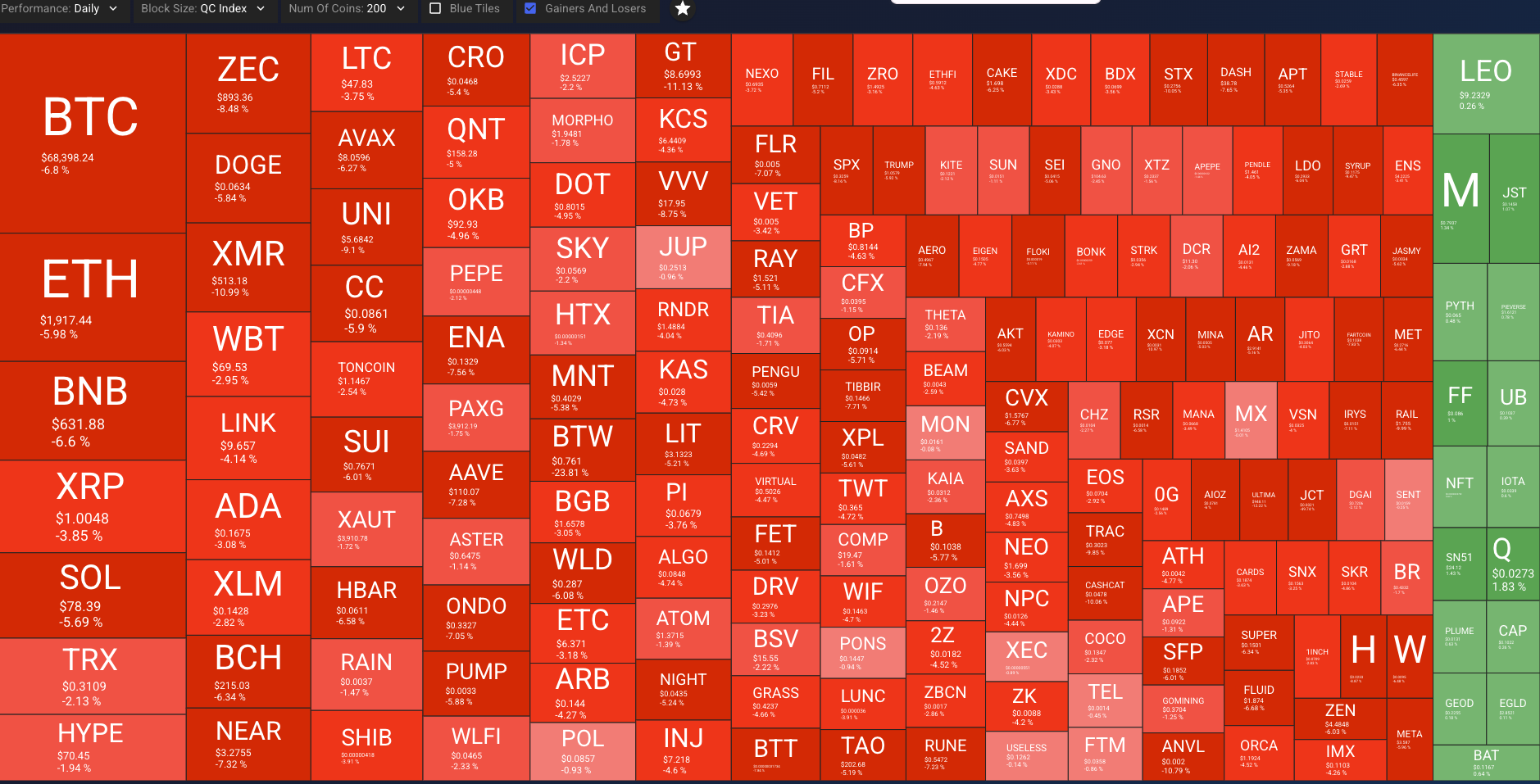
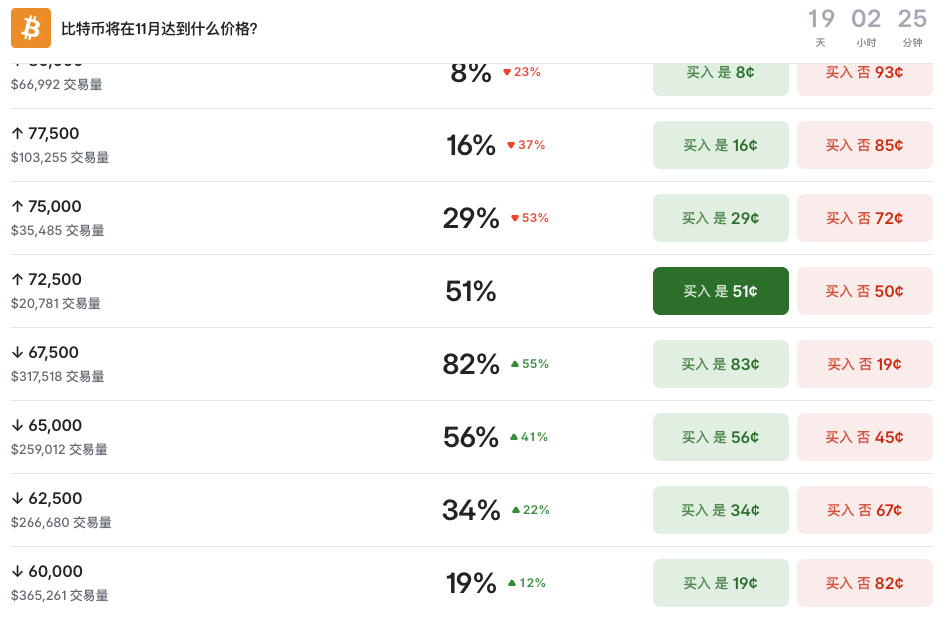
Odaily said Bitcoin had fallen more than 7% over the preceding 24 hours, while Ether had dropped more than 6% and slipped below $2,000. Citing Quantify Crypto, it reported that only 16 of the 200 largest tokens had risen over that period. It also cited Polymarket odds of 56% for Bitcoin reaching $65,000 in November, 29% for a return above $75,000, and 19% for a drop below $60,000. Those odds reflect wagers, not forecasts with guaranteed outcomes.
Rates and market liquidity
The report cited an October US consumer price index reading released on November 10: headline CPI rose 0.4% month over month, against an expected 0.3%, while core CPI rose 0.3%, against a forecast 0.2%. Odaily said markets put the probability of a 25-basis-point December rate increase above 90%; the probability assigned to a 50-basis-point increase had briefly reached 15% before falling to 9%. It also reported a US 10-year Treasury yield above 5% and said Bitcoin had fallen below $75,000 on November 10. Its suggestion that softer producer-price data could support a rebound was conditional, not a reported outcome.
On crypto-specific liquidity, Odaily cited SoSoValue data showing more than $1.4 billion in net outflows from US spot Bitcoin ETFs over five consecutive trading days, including $300 million on November 11. It said BlackRock’s IBIT accounted for most of that day’s outflow. The report put the ETFs’ Bitcoin holdings at $92.7 billion, or 1.46% of Bitcoin’s market value. It also said total stablecoin supply had fallen $14.2 billion over 30 days, describing that as the largest 30-day decline since 2022. Its conclusion that these figures signaled weaker demand is an interpretation of the reported flows.

Reported corporate developments and differing views
Odaily reported that Nvidia CEO Jensen Huang had resigned on November 12 and that CFO Colette Kress had become interim CEO. It said Nvidia shares fell more than 10% at one point and closed about 4.34% lower. The report treated that news as a catalyst for risk-asset selling, while identifying rates and liquidity as broader pressures.
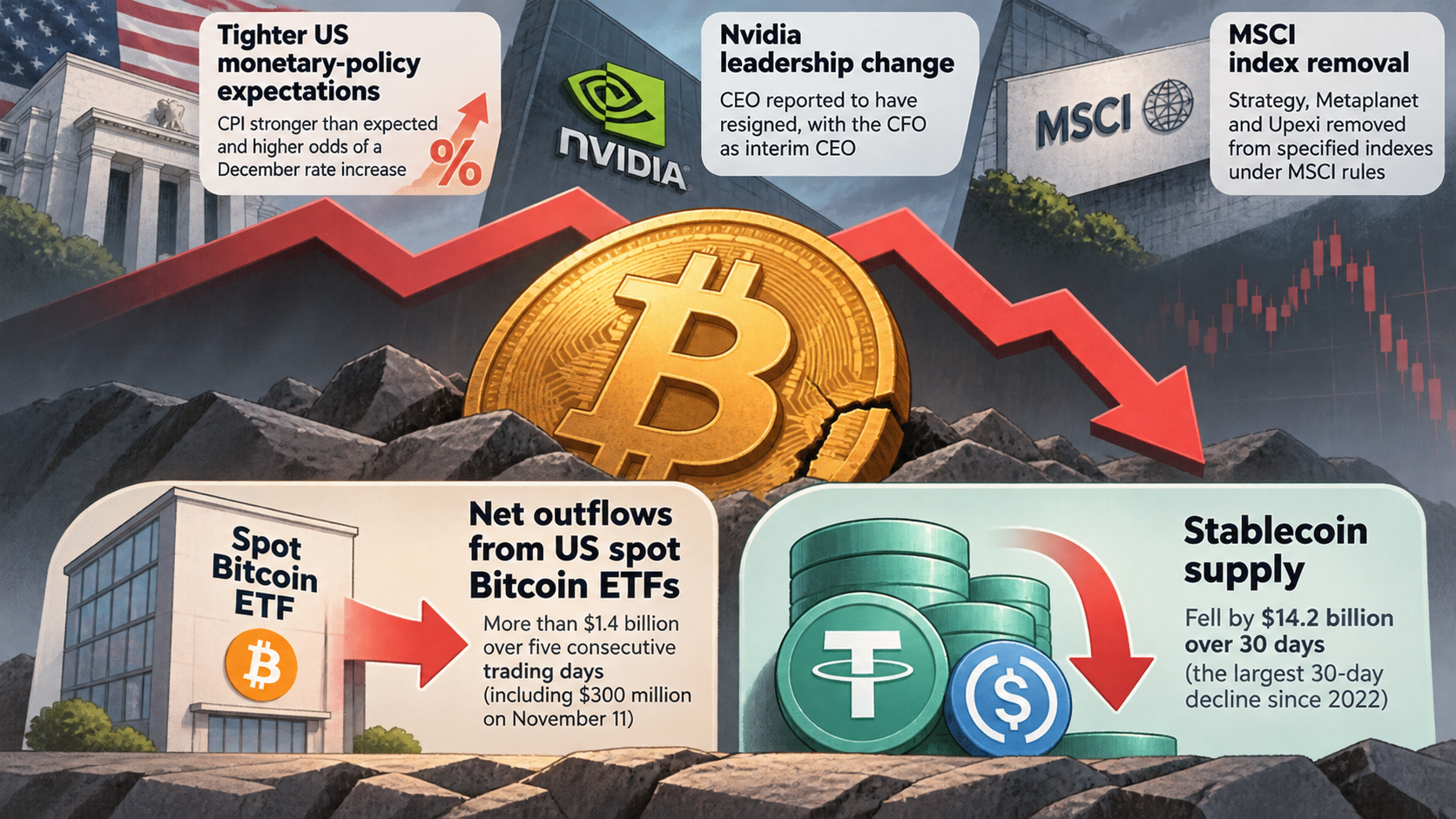
The report also said MSCI had removed Strategy, Metaplanet and Upexi from specified indexes under its classification rules. It cited roughly 13 million Strategy shares held by funds tracking MSCI’s Global Investable Market Indexes, valued at about $1.487 billion. A JPMorgan estimate cited by Odaily put potential forced selling at $1.8 billion to $2.8 billion, or about $8.8 billion if other major index providers followed. Those were estimates of possible share sales, not reported Bitcoin sales. Odaily argued that an index removal could weaken sentiment toward Bitcoin treasury companies and slow Strategy’s purchases.
Views on what might follow differed. CICC expected a 25-basis-point December rate increase rather than faster tightening. HTX chief analyst Cloud also considered a 50-basis-point increase unlikely, but said confirmation from future CPI readings would matter. Glassnode said its 30-day average Coinbase premium had fallen to its lowest level since February, while noting that past rallies had begun from similarly negative premiums. Traders cited in the report disagreed on whether Bitcoin’s decline offered an opportunity or called for further caution. None of those views establishes where the price will bottom.
The source provides no miner-level power costs, hashprice or difficulty data, so this sell-off alone does not establish a change in mining profitability.