How closely does Bitcoin follow the technology stocks that once moved with it? In an analysis published on November 20, 2026, DWF Labs found a widening split between Bitcoin and semiconductor shares, even as Bitcoin’s relationship with gold strengthened. The analysis used market data through November 13, 2026. It did not examine Bitcoin miners’ operating costs or revenue.
Stocks remain Bitcoin’s strongest broad-market link
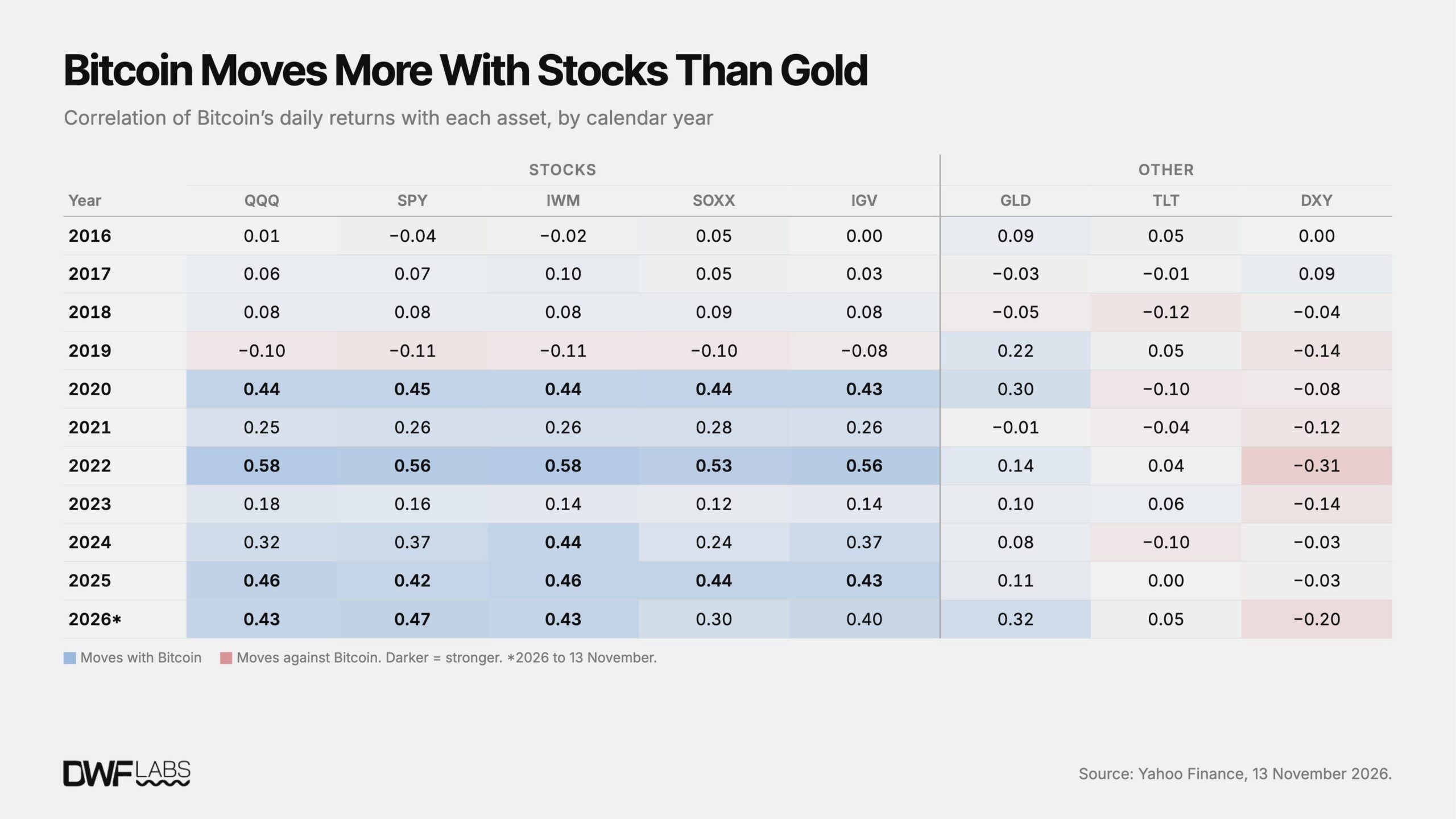
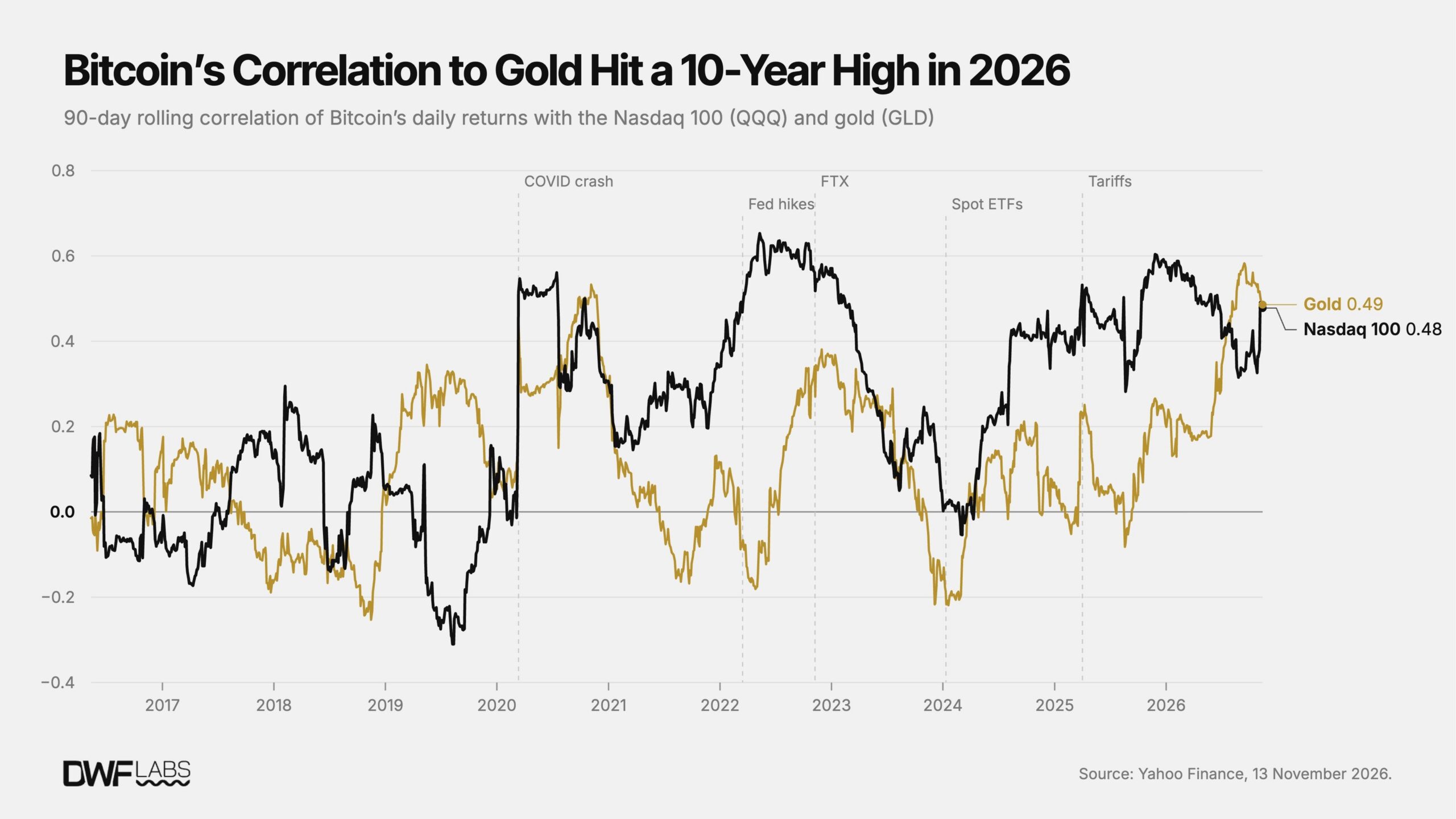
DWF Labs found that Bitcoin’s correlation with the Nasdaq 100 and S&P 500 was near zero before 2020, rose to roughly 0.39–0.40 between 2020 and the launch of U.S. spot Bitcoin ETFs, and remained around 0.39 afterward. That is a moderate correlation, not evidence that stocks determine every Bitcoin move. The relationship strengthened sharply during some selloffs: Bitcoin’s 90-day correlation with stocks reached 0.65 in May 2022.
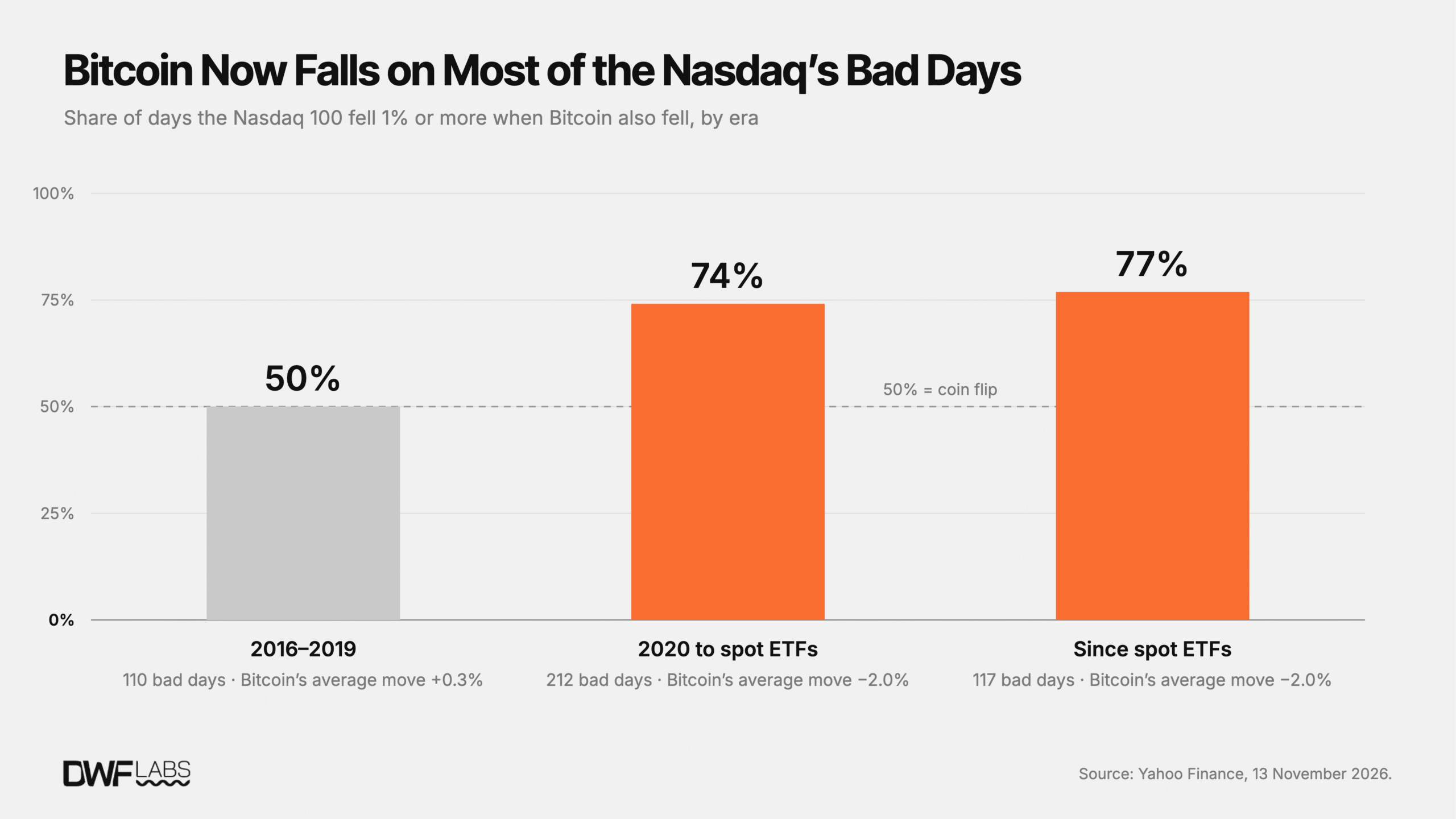
On days when the Nasdaq fell at least 1%, Bitcoin also declined 74% of the time in the period from 2020 to the ETF launch, and 77% of the time afterward, according to the analysis. Its average daily decline in those conditions was 2.0%. Gold fell on 57% of comparable days, with an average decline of 0.2%. Those figures complicate the idea that Bitcoin had consistently acted as a refuge during equity-market stress.
Semiconductor shares pulled away
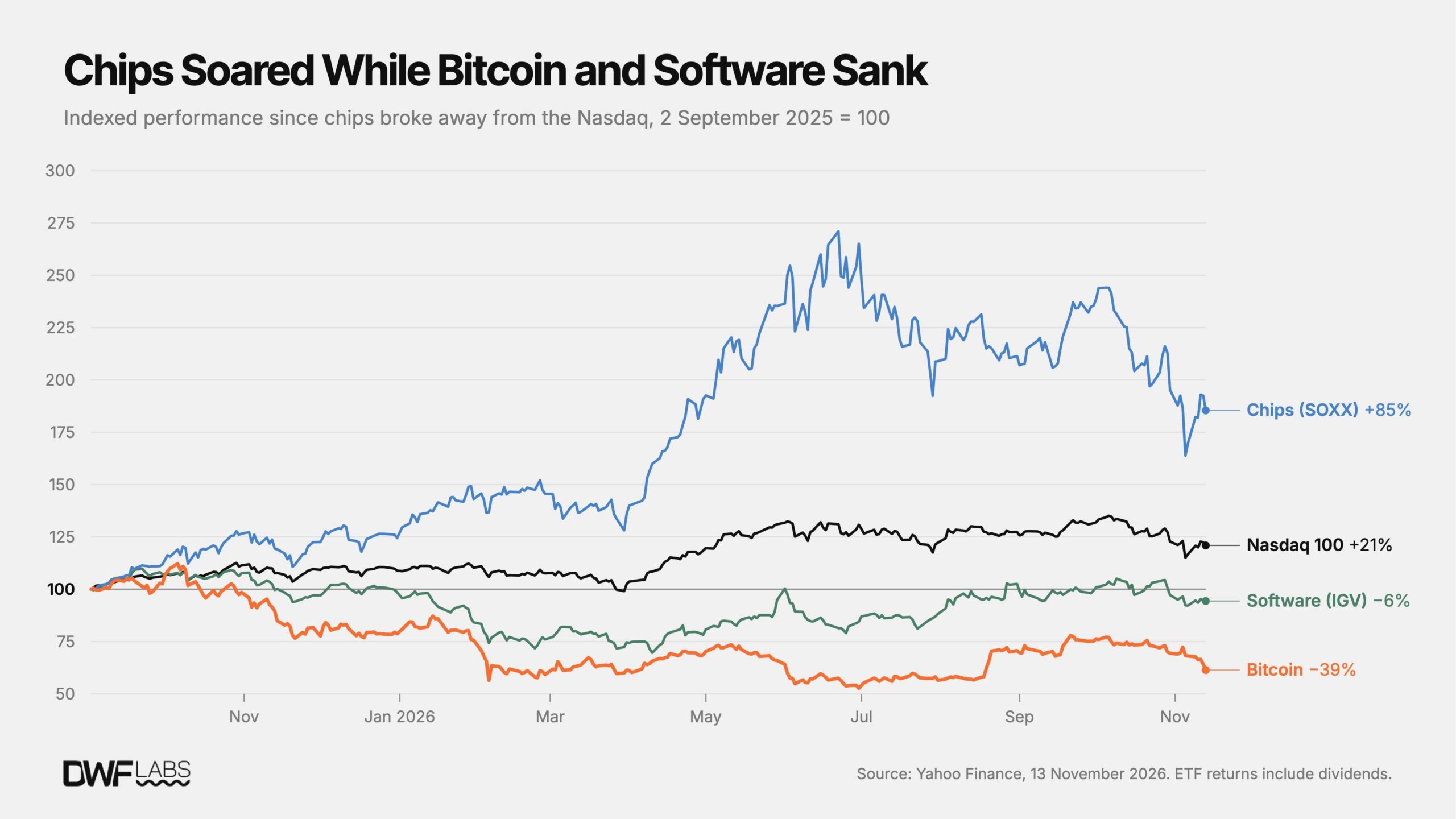
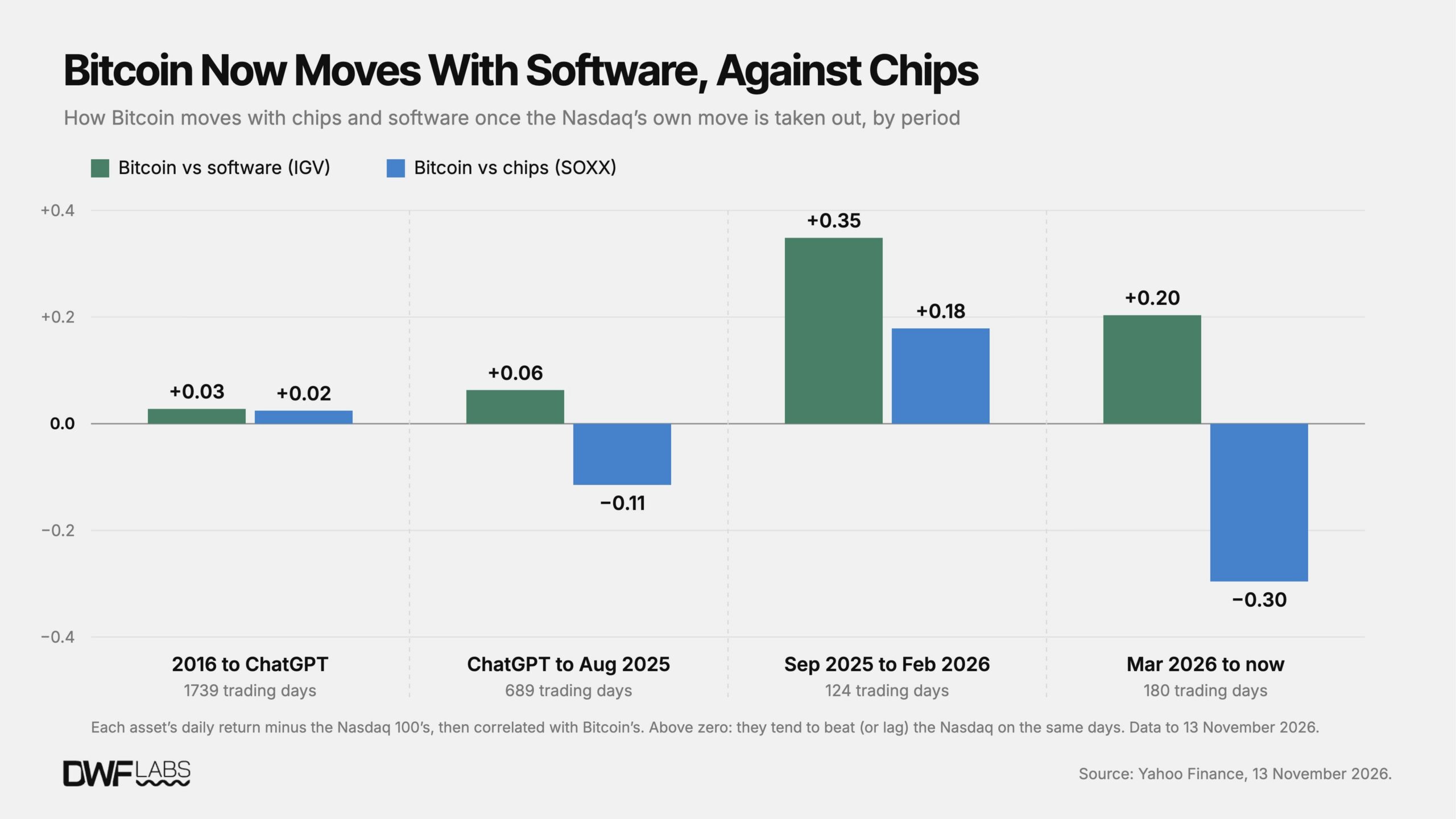
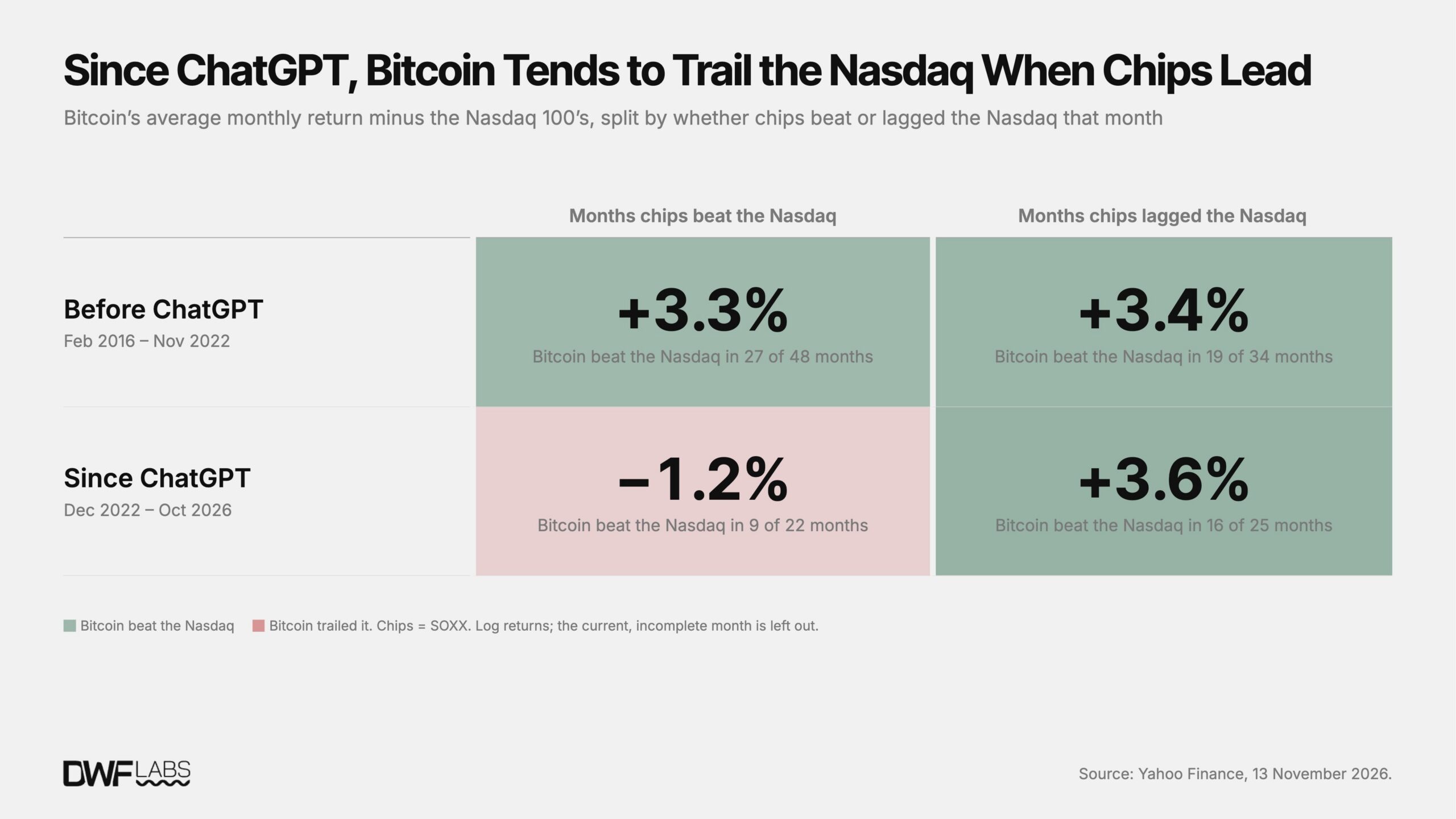
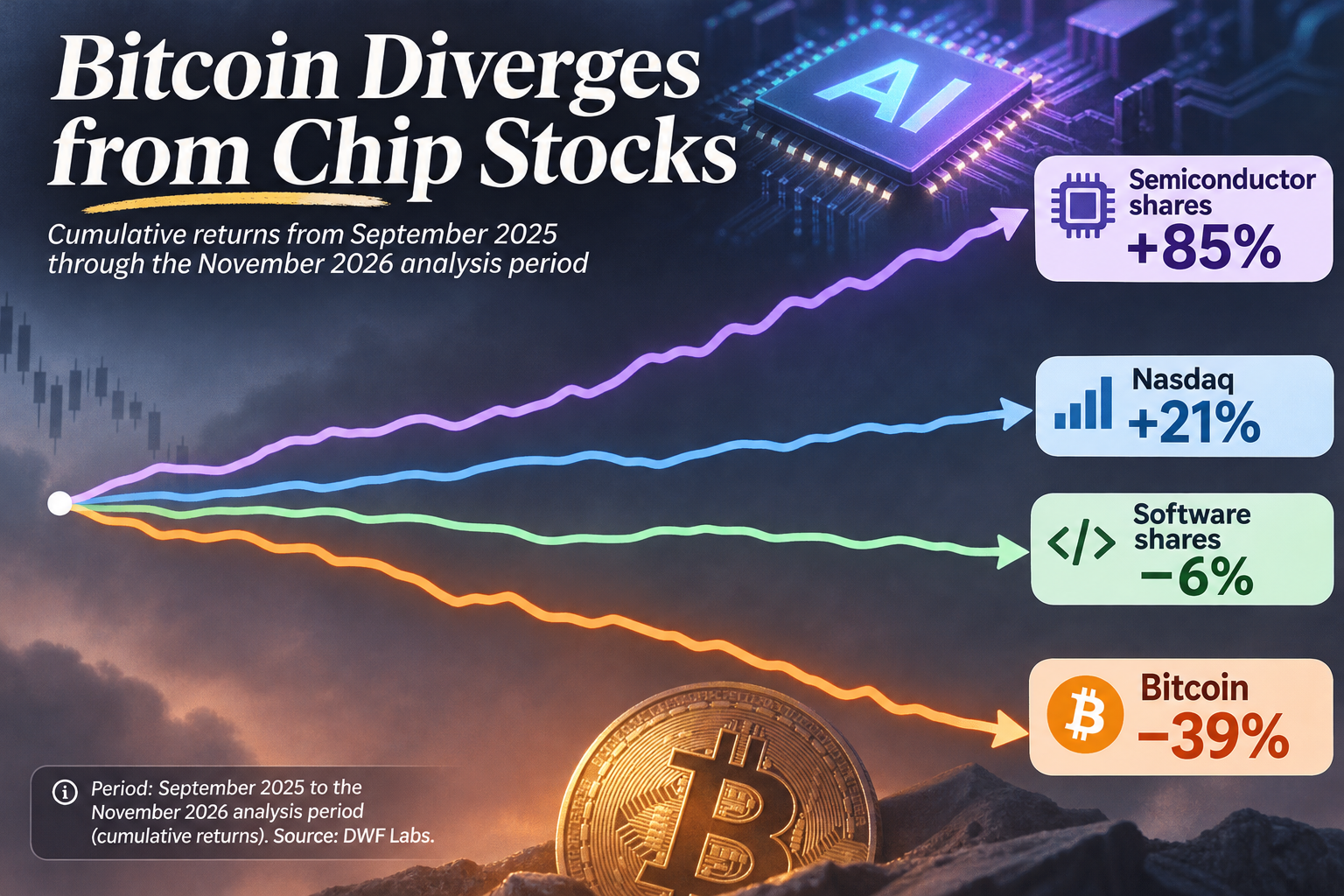
From September 2025 through the analysis period, semiconductor shares gained 85%, while the Nasdaq rose 21%, software shares fell 6%, and Bitcoin declined 39%. Although Bitcoin and semiconductor shares still had a positive overall correlation of 0.30 in 2026, DWF Labs found a different pattern after subtracting each asset’s Nasdaq return: since March 2026, Bitcoin’s relative daily returns had a −0.30 correlation with semiconductor shares and a +0.20 correlation with software shares. These are correlations of returns relative to the Nasdaq, not correlations of their outright prices.
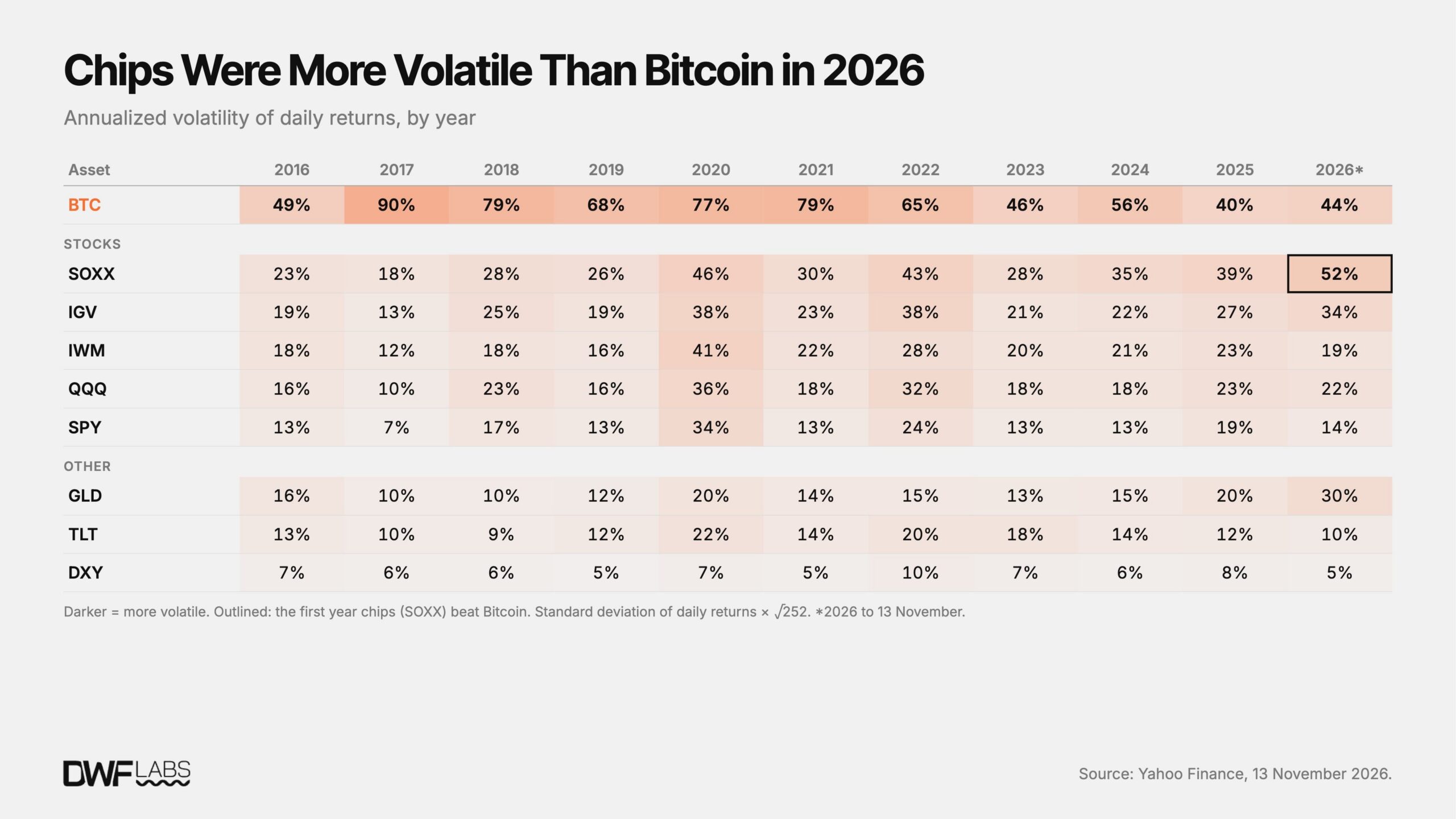
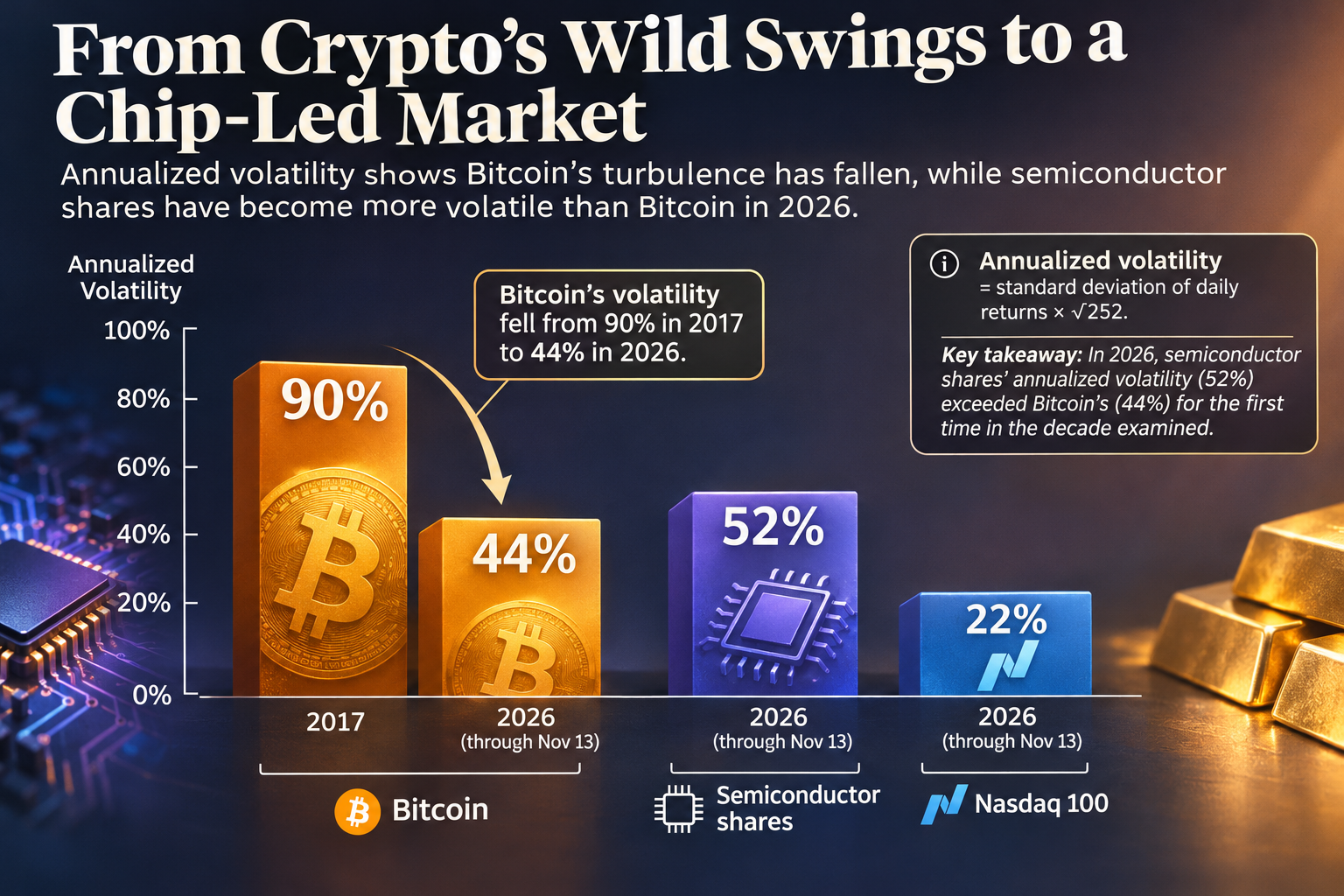
The volatility comparison also changed. Bitcoin’s annualized volatility fell from 90% in 2017 to 44% in 2026 through the study period. Semiconductor shares registered 52% in 2026, exceeding Bitcoin for the first time in the decade examined. Bitcoin nevertheless remained about twice as volatile as the Nasdaq, at 22%.
Gold’s closer link is recent
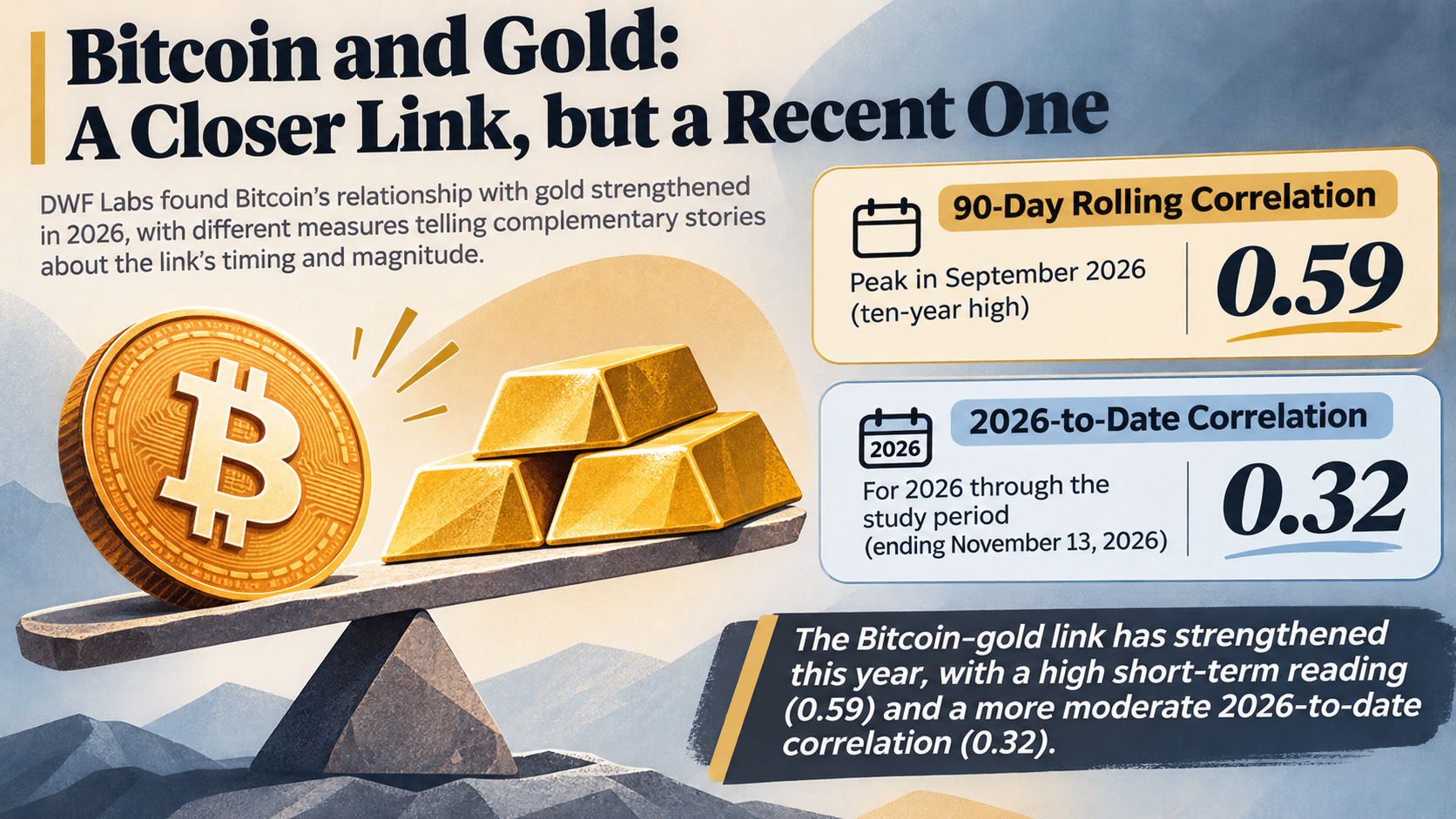
Bitcoin’s 90-day rolling correlation with gold reached 0.59 in September 2026, a ten-year high in the analysis, and stood around 0.49 near the reporting date. Its 2026 correlation with gold through the study period was 0.32. DWF Labs noted that Bitcoin–gold correlations had been weak in most earlier years; a recent increase does not establish that Bitcoin has become a dependable safe-haven asset.
The calculations used daily adjusted closing prices from Yahoo Finance for U.S. stock-market trading days between January 4, 2016, and November 13, 2026. ETF proxies included QQQ for the Nasdaq 100, SOXX for semiconductors, IGV for software and GLD for gold. Returns were calculated as logarithmic returns, correlations as Pearson correlations of daily returns, and annualized volatility as the standard deviation of daily returns multiplied by √252. Bitcoin’s UTC midnight close falls roughly three to four hours after the U.S. stock-market close, a timing difference to bear in mind when reading the daily comparisons.