How much longer could Strategy sustain its STRC buybacks? As reported on November 17, 2026, the company had spent roughly $2.7 billion buying back the preferred shares since July, leaving $332.2 million under its $3 billion authorization.
The buying had intensified even as STRC approached its $100 face value. A review of Strategy’s filings cited in the report found that the company spent about $1.4 billion on buybacks from September 28 through November 15—52% of the total spent since July. Weekly average purchase prices during that period ranged from $99.06 to $99.93. In July, CEO Phong Le had said Strategy would buy more when the discount was larger and reduce purchases as STRC approached $100.
The November 9–15 period brought the largest reported weekly outlay: $228.1 million for 2,282,510 shares, implying an average price of about $99.93. At that pace, another week of purchases would leave roughly $104 million of the existing authorization. Strategy had previously raised the limit from $1 billion to $2 billion in September and then to $3 billion in October; a further increase was not announced in the report.
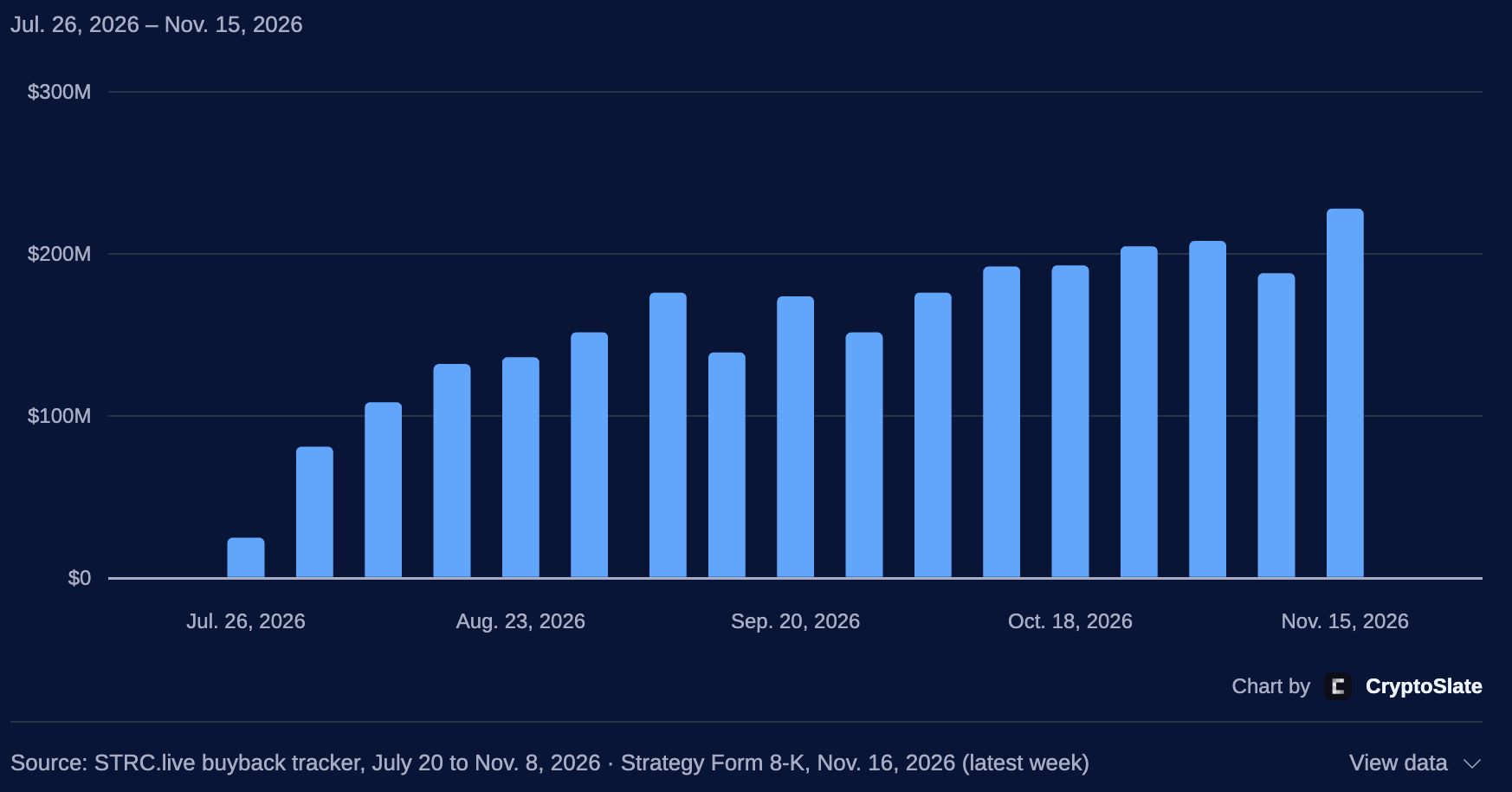
The capital-allocation trade-off was visible in Strategy’s Bitcoin purchases. From September 28 through November 15, it spent about $253 million on 3,183 BTC, compared with approximately $1.39 billion on STRC buybacks. In the final reported week, it spent $33.4 million on 485 BTC versus $228.1 million on STRC. The report put its holdings after those purchases at 850,849 BTC, with an aggregate acquisition cost of about $64.2 billion, or $75,452 per coin, and an unrealized loss exceeding $10 billion at the time.
Buying back and cancelling STRC would reduce future dividend obligations on those shares; the report cited a 12% annualized dividend rate. It also said $206.3 million of recent STRC buybacks was funded through MSTR common-share sales. Whether Strategy expands its buyback authorization or slows purchases near face value remained an open question at the original reporting date.