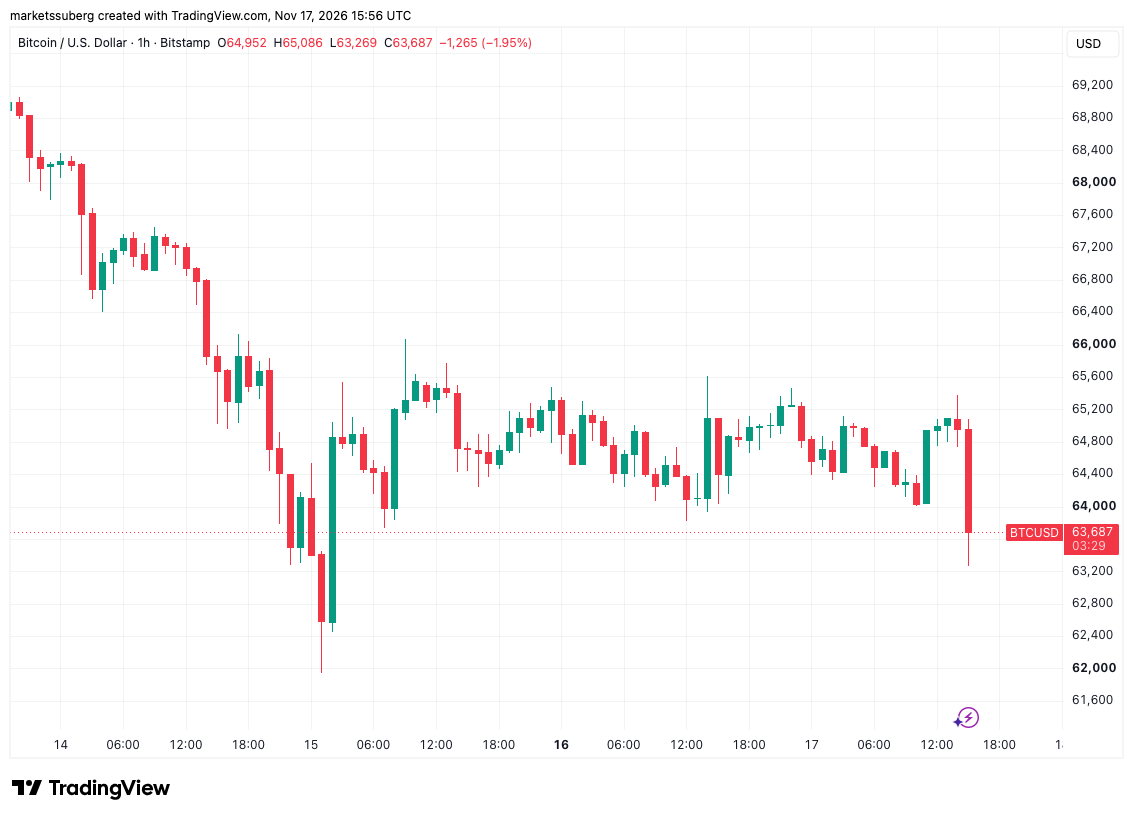
How far did Bitcoin fall, and what were traders watching? In a report published Nov. 18, 2026, Bitcoin had dipped to $63,269 on Bitstamp during the previous day’s US trading session, down as much as 2.5% on the day, according to TradingView data cited in the report. The move took BTC below the $64,000–$66,000 range it had occupied since Nov. 15. No mining-cost or hashrate change was cited as a cause; the report focused on broader market nerves ahead of Nvidia’s third-quarter earnings and guidance.
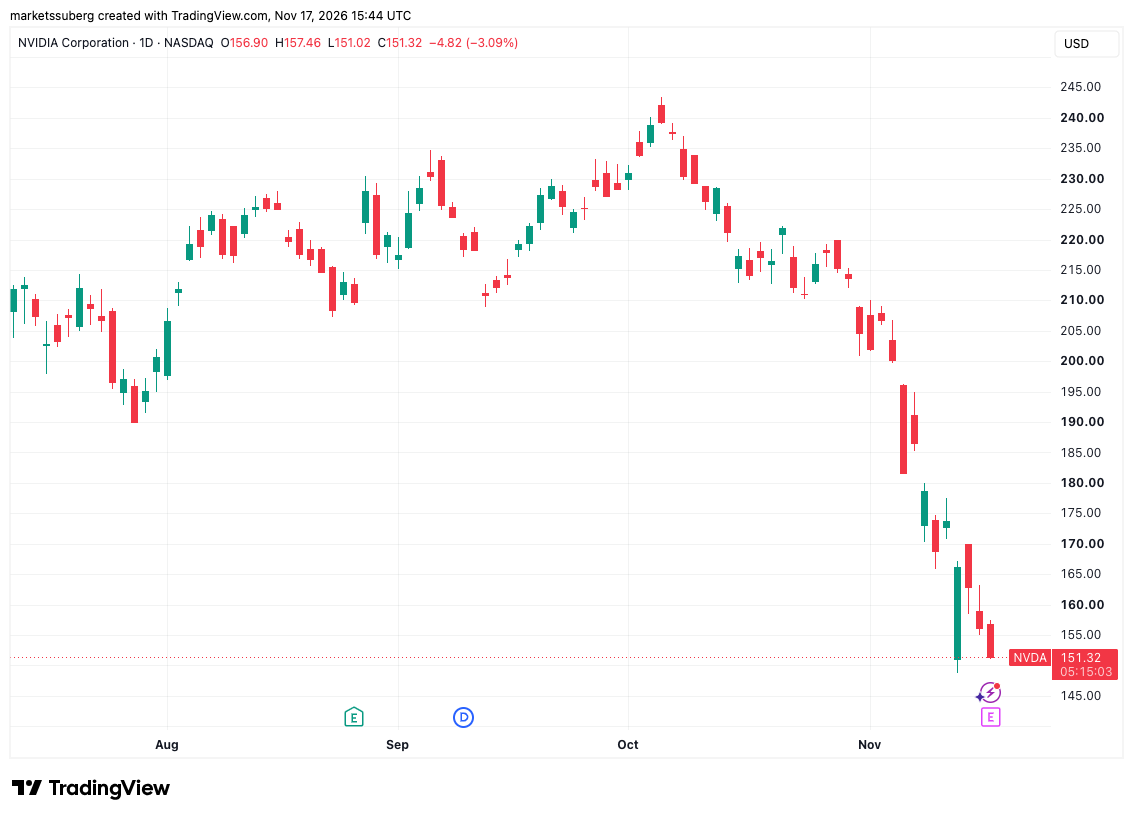
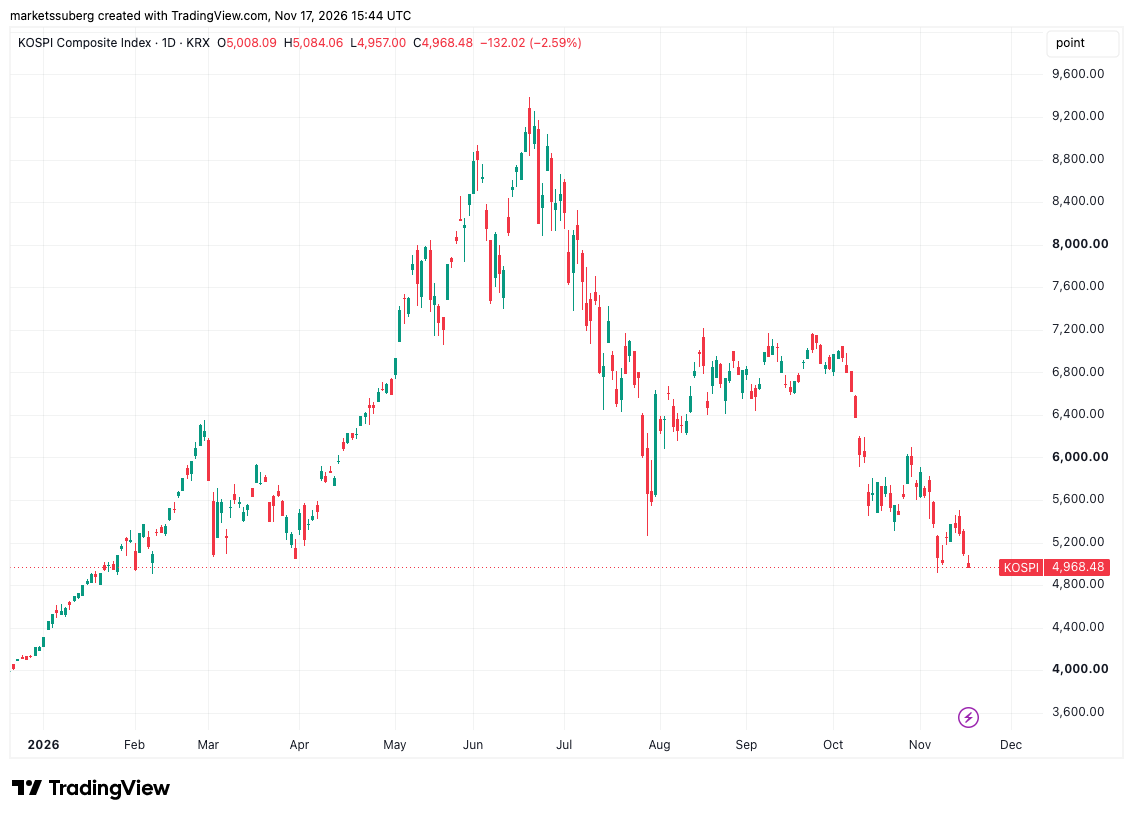
Nvidia shares fell more than 3% to $150.35 on Tuesday, approaching their Nov. 12 low of $148.80, which the report described as their lowest level since late June. South Korea’s KOSPI closed 2.6% lower at 4,968. A Bank of America fund-manager survey, as cited in the report, showed investors’ overweight position in technology stocks falling from 37% to 12% the previous month—the largest monthly reduction since June 2006.
The report also described uncertainty surrounding Nvidia’s former CEO Jensen Huang. Nvidia’s board announced a National Security and Export Control Oversight Committee on Tuesday, while Huang was due to testify before US Congress on Dec. 1. Trading resource The Kobeissi Letter estimated the odds of his reinstatement at less than 20% and questioned whether his departure justified what it described as a $750 billion loss in Nvidia’s market value. Those were Kobeissi’s assessments, not established outcomes.
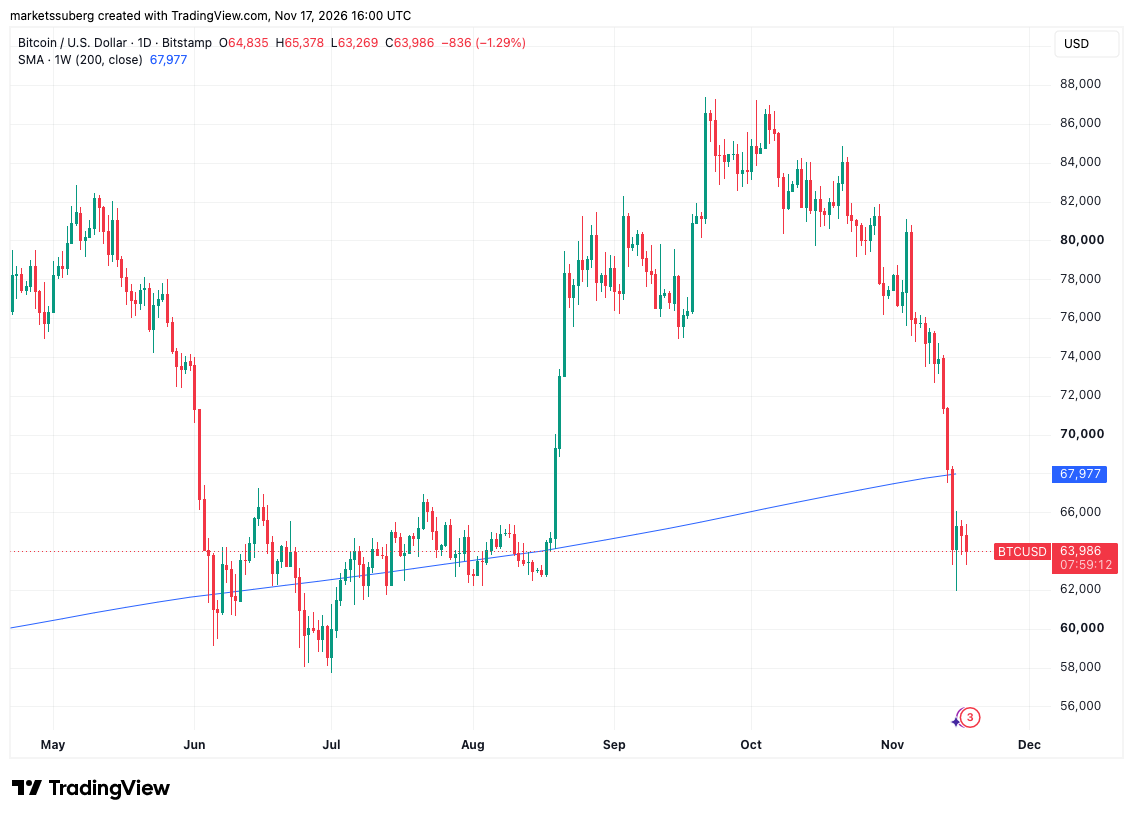
For Bitcoin, Material Indicators cofounder Keith Alan said reclaiming the 200-week simple moving average, then at $67,977, would not by itself confirm a durable rebound. He said lower-time-frame prices would also need higher swing lows and highs, with strong buyer volume on moves through local resistance. Until then, he warned, a bounce could prove to be a trap rather than a recovery.