If AI made it possible to forge Bitcoin signatures, could users agree on a replacement? In a November 27, 2026 essay, venture capitalist Chamath Palihapitiya’s firm, Social Capital, argued that AI could uncover a mathematical shortcut that puts holders’ coins at risk. Palihapitiya considers agreement on an upgrade close to impossible and says Bitcoin could go to zero. Michael Saylor argues that a break in cryptography would call for an upgrade, not a conclusion that Bitcoin is worthless.
For Palihapitiya, the warning reverses a longstanding view. The former Facebook executive bought Bitcoin at about $100 per coin, according to CNBC. In 2017, he predicted it would reach $1 million and urged followers to put 1% of their wealth into it. He was still forecasting $500,000 in August 2024. By October 2026, he was telling the Moonshots podcast that Bitcoin’s upside was capped and that it would eventually be hacked. He said the response prompted him to ask his team to review his reasoning with experts.
What the evidence shows. Bitcoin holders rely on digital signatures to authorize spending. Social Capital’s concern is that AI might find a way to forge a signature in a practical amount of time. The essay cited proposed AI-assisted proofs of the Riemann hypothesis and the exponential time hypothesis, both still under expert review. It also pointed to a July 2026 result in which Anthropic’s Claude found a faster attack on a weakened version of a common cipher. Anthropic said the result did not affect systems in use. Neither example demonstrated a forged Bitcoin signature.
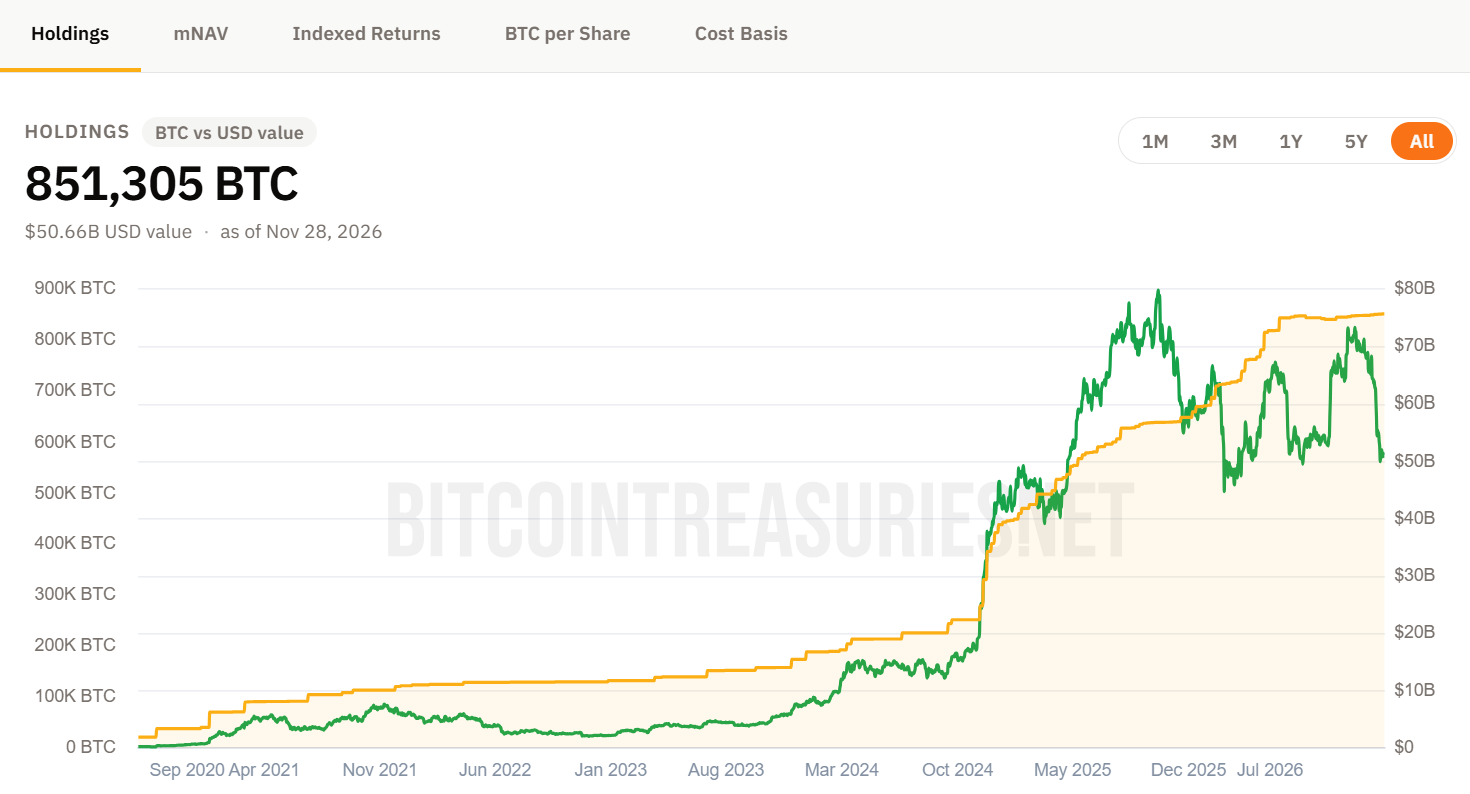
Where the disagreement lies. Saylor, whose Nasdaq-listed company MicroStrategy held more than 850,000 BTC and had spent more than $63 billion buying Bitcoin, called Palihapitiya’s reasoning a logical fallacy. He argued that if AI broke encryption, all digital commerce would be at risk and the response would be to adopt next-generation encryption. On November 28, BitGo chief executive Mike Belshe made a similar distinction: banks and services such as Signal would also face risks, he said, but the possibility of new mathematics did not mean they would lose all value.
The Ethereum Foundation already ranked AI as a more urgent threat than quantum computers. For Bitcoin, the unresolved question is not just whether stronger cryptography would be available, but whether users would agree to adopt it. No central authority can order that change.